- Effluent filter
- A cartridge at the outlet of a septic tank that catches solids before they travel to the disposal field. It protects the field from clogging, but it needs periodic cleaning, and a blocked one is a typical cause of slow drains.
- Septage
- The material pumped from a septic tank: floating scum, liquid and settled sludge. It is hauled and disposed of under public health rules, and the trucks that move it are regulated separately from ordinary delivery vehicles.
- Sludge and scum layers
- Inside a working tank, heavy solids settle into sludge while grease and light solids float as scum, leaving a clearer zone between them. Pumping is due when these layers take up too much of the tank's depth.
- Percolation test
- A field test in which holes are dug at the proposed absorption area, soaked, and then watched for how quickly the water level drops. The rate of fall rates the soil and is used to size fields and seepage pits.
- Disposal field
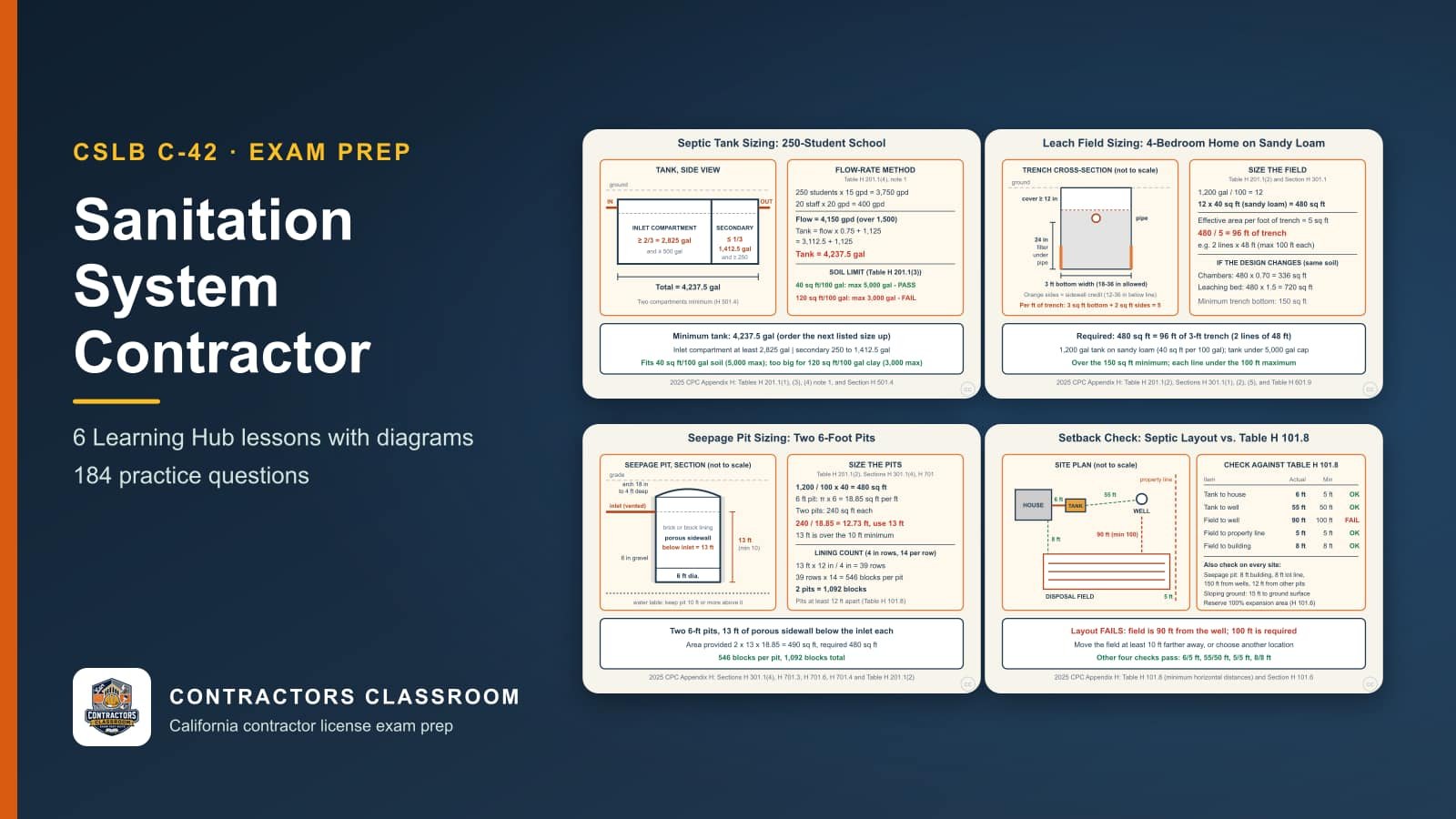
- A set of perforated pipes laid in gravel-filled trenches that spreads clarified effluent into the soil. Its length depends on soil absorption, and the code limits trench width, line length, cover and spacing between lines.
- Distribution box
- A box that receives flow from the tank and divides it among the lines of a field. It must be level so each line gets its share, otherwise one line overloads and the field fails early.
- Seepage pit
- A deep, lined excavation, usually circular, where effluent soaks out through the walls into surrounding soil. It is used where soils below the surface absorb well, and larger or more numerous pits are needed in tight soil like clay.
- Sidewall absorption area
- The wall surface of a pit below the inlet that can actually take in liquid, excluding any hardpan, rock or clay layer. Required area divided by the circumference tells how deep a pit must be.
- Reserve area
- Land set aside, and kept clear of buildings and driveways, for a future replacement field or pit of at least the original size. It lets the owner rebuild the system if the first one fails.
- Biomat
- A dark, slimy layer of microbes and organic matter that forms where effluent meets soil. A thin one helps treatment, but a thick one slows absorption, which is why overloaded systems and heavy grease can lead to surfacing wastewater.
- Setback distance
- The minimum separation the code requires between parts of a sewage system and things such as wells, buildings, streams, property lines and water lines. The distance differs by component, and footnotes can change it.
- Hardpan
- A dense, cemented soil layer that water barely penetrates. It is excluded when absorption area is counted, and finding it during a pit or trench excavation can change the whole design.
- Aerobic treatment unit
- A package plant that bubbles air through wastewater so oxygen-loving bacteria treat it more thoroughly than a plain tank. It is one kind of alternative treatment system, and it needs power, alarms and regular service.
- Building sewer fall
- The downward slope of the pipe carrying waste from the building to the disposal point. A uniform slope keeps solids moving with the liquid, while too little slope leaves solids behind and too much leaves the water running ahead of them.
- Vacuum truck
- A tank truck with a pump that sucks septage and other liquid waste from tanks and sewers. The public health department regulates these trucks and their loads, so questions about who authorizes them are fair game.
- Hydrogen sulfide
- A toxic gas given off by decomposing waste, recognized by a rotten-egg smell. At higher levels it dulls the sense of smell, so odor cannot serve as a warning, and it collects in tanks and sewers.
- Lower flammable limit
- The smallest concentration of a gas or vapor in air that can burn. Tank entry rules treat readings above a small fraction of this limit as a hazardous atmosphere, such as methane building up in a septic tank.
- Entry attendant
- The person who stays outside a tank or sewer for the whole entry, keeps track of those inside and calls for rescue. The attendant does not go in, even to help, because a second victim doubles the emergency.
- Atmospheric testing
- Checking the air in a tank with a calibrated meter before and during entry, taking oxygen first, then flammable gases, then toxic gases. The order matters because many combustible gas meters need oxygen to read correctly.